

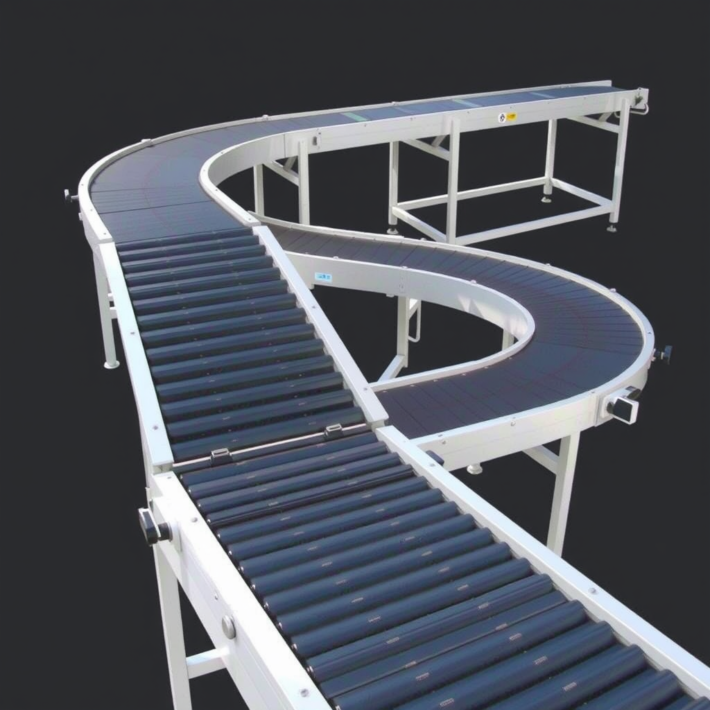
Belt conveyors have become an integral part of modern industrial processes, providing efficient and reliable transportation of materials across various sectors. Whether it’s in a manufacturing facility, distribution centre, or logistics operation, belt conveyor systems offer unparalleled advantages in terms of productivity and cost-effectiveness. This guide delves into the different types of belt conveyors, their uses, and the myriad benefits they bring to businesses.
What is a Belt Conveyor?
A belt conveyor is a continuous loop of material that is used to transport items from one point to another using a belt made of rubber, fabric, or metal. The belt is typically driven by motors and supported by a series of pulleys or rollers. The most common types of industrial belt conveyors can handle a wide range of materials, from raw goods to finished products, making them highly versatile tools in various industries.
FAQ: Belt Conveyor
What is a belt conveyor?
A belt conveyor is a mechanical device used to transport materials or goods from one location to another within a facility. It consists of a continuous loop of material (the belt) that moves around pulleys, allowing items to be transported efficiently over varying distances and elevations.
How does a belt conveyor work?
Belt conveyors operate by rotating the endless loop of the belt around two or more pulleys. The drive pulley powers the movement while other pulleys support and guide the movement of the belt and its load. The items are placed on top of the moving belt, which carries them along as it travels in one direction.
What are the main components of a belt conveyor?
The main components of a belt conveyor include:
- Belt: The flexible material that carries loads.
- Pulleys: Devices at either end that rotate to move the belting.
- Frame: Structural support for all components.
- Drive system: Motor or gearbox providing power.
- Idlers: Rollers supporting and guiding the returning side of the belting.
What types of materials can be transported by a belt conveyor?
Belt conveyors can transport various materials, including bulk products such as grains, coal, ores, aggregates, packages for shipping, automotive parts, and many others. They can also handle fragile or sensitive items thanks to their adjustable speed options and smooth operation.
What industries commonly use belt conveyors?
Belt conveyors are widely used across multiple industries including:
- Manufacturing
- Mining
- Agriculture
- Food processing
- PackagingThese systems play an essential role in improving efficiency in production lines and logistics operations.
What factors should be considered when designing a belt conveyor system?
When designing a belt conveyor system, consider:
- Type and weight of materials being transported
- Horizontal/vertical distance requirements
- Speed requirements
- Environmental conditions (temperature, humidity)
- Space availability for installation
- Safety features
How do I maintain my belt conveyor system?
Regular maintenance tasks include:
- Inspecting belts for wear or damage
- Checking tensioning mechanisms
- Lubricating moving parts like bearings and pulleys
- Ensuring alignment is correct
Following manufacturer recommendations for scheduled inspections will help extend your equipment’s lifespan.
Can I customise my belt conveyor design?
Yes! Belt conveyors can be customised based on specific needs such as length, width, speed variations, types of drives (manual/electric), incline angles – almost any aspect you require based on your operational needs!
Where can I purchase industrial-grade belts for my conveyance system?
You can purchase industrial-grade belts from manufacturers specialising in conveying solutions or distributors who carry documented brands known for quality performance materials suitable for numerous applications.
If you have any other questions regarding belt conveyors, feel free to reach out!
Types of Belt Conveyors
Belt conveyors come in various designs to suit specific applications. Understanding these different types can help businesses select the right conveyor system for their needs.
1. Modular Belt Conveyors
Modular belt conveyor systems are constructed using interlocking plastic segments, allowing for easy maintenance and flexibility in design. These systems are particularly beneficial in applications requiring frequent line changes, as they can be configured to fit various layouts and product types. Their robust construction makes them suitable for handling items that may be heavy or abrasive, such as in food processing or packaging operations.
2. Chain Belt Conveyors
A chain belt conveyor employs a chain mechanism that drives a belt made of lateral links. This type of conveyor is ideal for transporting heavy and bulky items that standard belt conveyors may not effectively handle. Chain belt conveyors are often used in automotive manufacturing, heavy machinery production, and recycling industries, where robust and reliable material handling is crucial.
3. Curved Belt Conveyors
Curved belt conveyors feature a belt that can navigate bends and curves, providing an efficient solution for transportation in limited spaces. These conveyors are commonly used in packaging facilities where items must change directions without disrupting the flow of operations. Their ability to maintain product orientation while moving around corners makes them an essential component in many production lines.
4. Incline/Decline Belt Conveyors
Inclined or declined belt conveyors are designed for transporting materials at an angle. This makes them particularly useful for elevating or lowering products between different floors or levels within a facility. From moving products from loading docks to production areas to transporting finished goods to shipping, these systems improve workflow and efficiency.
Applications of Belt Conveyor Systems
Belt conveyor systems are employed in a vast array of industries, including:
-
Manufacturing: In assembly lines, belt conveyors facilitate the smooth transport of components and finished goods, contributing to overall efficiency and productivity.
-
Mining and Quarrying: These sectors rely on heavy-duty belt conveyors to move mined materials, such as coal, ores, and aggregates, from one location to another with minimal manual handling.
-
Food and Beverage Processing: Belt conveyors designed for sanitary conditions are essential in handling food products, ensuring that hygiene standards are maintained throughout the processing stages.
-
Logistics and Distribution: In warehouses, belt conveyor systems play a crucial role in sorting and distributing packages, enhancing the speed and accuracy of order fulfilment.
Manufacturing: In assembly lines, belt conveyors facilitate the smooth transport of components and finished goods, contributing to overall efficiency and productivity.
Mining and Quarrying: These sectors rely on heavy-duty belt conveyors to move mined materials, such as coal, ores, and aggregates, from one location to another with minimal manual handling.
Food and Beverage Processing: Belt conveyors designed for sanitary conditions are essential in handling food products, ensuring that hygiene standards are maintained throughout the processing stages.
Logistics and Distribution: In warehouses, belt conveyor systems play a crucial role in sorting and distributing packages, enhancing the speed and accuracy of order fulfilment.
Benefits of Using Belt Conveyors
Investing in a belt conveyor system offers numerous advantages to businesses, making them an attractive option for material handling.
1. Increased Efficiency
Belt conveyors streamline the transport of materials, reducing the need for manual handling and minimising downtime during production processes. The continuous operation of conveyor systems ensures that materials are moved quickly and efficiently, leading to increased overall productivity.
2. Cost-Effectiveness
Automating material handling with belt conveyor systems reduces labour costs and operational expenses. Furthermore, their durability and low maintenance requirements mean that businesses can enjoy long-term savings by relying on these robust systems.
3. Versatile Design
Belt conveyor systems can be customised to accommodate specific materials and operational needs. Whether a company requires a modular belt conveyor for frequent layout changes or a chain belt conveyor for heavy loads, the versatility of these systems allows businesses to tailor solutions that meet their unique demands.
4. Improved Safety
Belt conveyors help minimise workplace risks by reducing manual lifting and increasing efficiency. Many systems are equipped with safety features such as emergency stop buttons, guards, and belt covers to protect workers and enhance overall safety in the workplace.
5. Easy Integration
Belt conveyor systems can seamlessly integrate with existing production lines and other equipment, making it easier for companies to enhance their operations without overhauling their entire infrastructure.
A belt conveyor is essential for efficient material handling in various industries. For optimal performance, consider exploring advanced options available at https://www.conveyorrollers.co.uk/conveyors/belt-conveyors, which offer reliable solutions tailored to your needs.
Choosing the Right Belt Conveyor Company
When it comes to selecting a belt conveyor company, it’s vital to consider factors such as experience, reputation, customer service, and the range of belt conveyor systems for sale. A reputable company will offer tailored solutions, assisting in the design, installation, and maintenance of the conveyor system to ensure maximum performance and reliability.
In summary, belt conveyors are a cornerstone of modern industrial operations. With various types available to suit different applications and a wealth of benefits to offer, these systems play a pivotal role in enhancing efficiency, reducing costs, and improving safety in material handling across diverse sectors.