

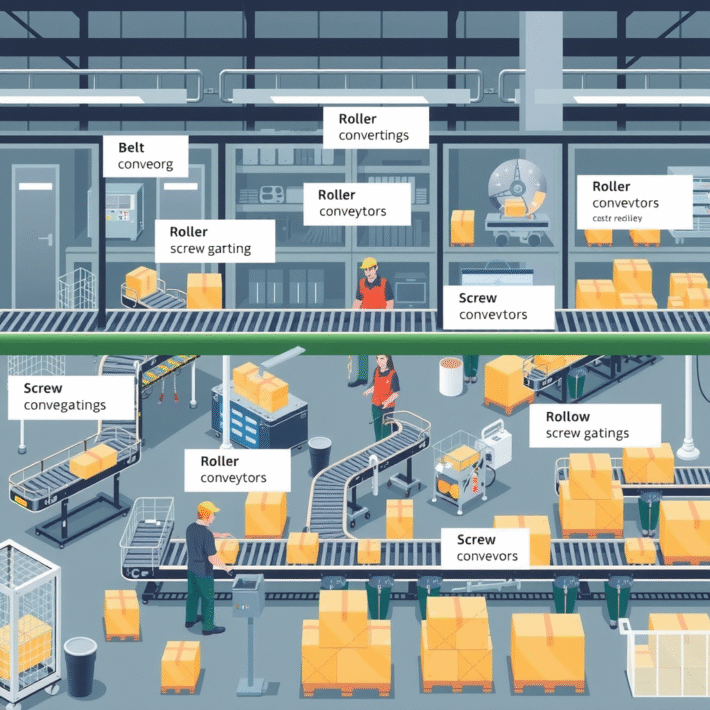
In today’s fast-paced world, efficiency is key to success in various industries. One of the critical components that contribute to this efficiency is the use of conveyor systems. Whether you’re transporting heavy materials in a warehouse or moving products smoothly along an assembly line, conveyors play a vital role in streamlining operations. In this guide, we’ll explore the different types of conveyor systems available, their numerous benefits, and the wide range of applications they serve. Let’s dive in!
Types of Conveyor Systems
Conveyor systems come in a variety of designs, tailored to meet the specific needs of different industries. Below are some of the most common types of conveyor systems:
1. Belt Conveyors
Belt conveyors are one of the most widely used types of conveyor systems. They consist of a continuous loop of material made from rubber, fabric, or metal, which moves over pulleys. These systems are particularly effective for transporting bulk materials, making them ideal for mining, agriculture, and manufacturing industries. Their ability to move large quantities with minimal manual handling makes them a go-to solution in various settings.
2. Roller Conveyors
Roller conveyors use a series of rollers to move items along the conveyor system. These systems can be powered or gravity-fed, making them versatile for different situations. They are often used in warehousing and distribution centres for the efficient movement of packages and pallets. The simpler design of roller conveyor systems means they are easier to maintain and often come with lower operational costs.
3. Chain Conveyors
Chain conveyors operate using a series of connected chains that transport materials along a fixed path. These systems are commonly employed in environments where heavy-duty materials need to be moved, such as in automotive manufacturing or heavy machinery assembly. The strength and durability of chain conveyors make them a reliable choice for robust operations.
4. Screw Conveyors
Screw conveyors consist of a rotating helical screw that moves materials from one point to another. They are typically used for bulk material handling, especially for powders and granular substances, such as cement or grain. These conveyors are versatile and can work in horizontal, vertical, or inclined positions, making them a practical solution for various applications.
5. Pneumatic Conveyors
Pneumatic conveyor systems utilise air pressure to move materials through tubes or ducts. They are particularly effective for transporting powders, pellets, and granules. Pneumatic systems are typically used in industries like food processing, pharmaceuticals, and chemicals due to their enclosed design, which reduces contamination and protects the product.
Benefits of Conveyor Systems
Implementing conveyor systems within your operations offers an array of benefits, making them an indispensable asset for many businesses.
1. Increased Efficiency
Conveyor systems allow for the continuous movement of materials, significantly improving efficiency compared to manual handling. This continuous flow means increased productivity, allowing your workforce to focus on more crucial tasks.
FAQ – Conveyor Systems
What are conveyor systems?
Conveyor systems are mechanical devices or assemblies that transport materials from one location to another within a manufacturing, warehousing, or distribution environment. They can be powered or unpowered and come in various designs such as belt conveyors, roller conveyors, and screw conveyors.
How do conveyor systems work?
Conveyor systems typically consist of a frame, a mechanism for moving the material (such as belts or rollers), and controlling components like motors. The operation usually involves the continuous movement of the transporting medium to move goods along an assembly line or between workstations.
What are the different types of conveyor systems?
There are several types of conveyor systems including:
- Belt Conveyors: Use endless looped belts to convey materials.
- Roller Conveyors: Utilise rollers to facilitate movement.
- Screw Conveyors: Employ spiral blades to transfer bulk materials.
- Chain Conveyors: Feature chains for supporting products during transport.
- Pneumatic Conveyors: Transport materials through air pressure in tubes.
What industries use conveyor systems?
Conveyor systems are utilised in various industries including:
- Manufacturing
- Warehousing
- Mining
- Agriculture
- Food processing
These industries benefit from improved efficiency and reduced manual handling when using conveyor systems.
Are conveyor systems customizable?
Yes! Conveyor systems can be customised based on specific needs such as load capacity, length, speed, and layout design. Customisation allows businesses to optimise their operations according to their unique requirements.
What maintenance is required for conveyor systems?
Regular maintenance is essential for ensuring that your conveyor system operates efficiently. Common maintenance tasks include:
- Inspecting belts for wear and tear.
- Checking alignment and tension of components.
- Lubricating moving parts.
- Cleaning debris from the system.
- Performing regular performance checks on motors and drives.
Can I install a conveyor system myself?
While some smaller modular conveying solutions can be installed by non-professionals with basic tools, larger or more complex setups typically require professional installation due to safety considerations and technical knowledge needed for proper configuration.
How do I choose the right conveyor system for my needs?
To select an appropriate conveyor system, consider factors like:
- Type of materials being conveyed (weight/size).
- Layout of your facility (space constraints).
- Desired speed/wait times.
- Specific industry regulations you must adhere to.
Consulting with experts in material handling can also help tailor your solution effectively.
What safety measures should be taken with conveyors?
Safety is critical when working with conveyors; key measures include:
- Keeping guards on machinery parts exposed during operation.
- Training staff on safe operating procedures.
- Regularly inspecting safety features such as stops/emergency switches.
- Implementing signage around machinery zones indicating hazards properly.
If you have more questions about our products related to conveyor systems, feel free to reach out!
2. Reduced Labour Costs
By automating the movement of goods, conveyor systems can reduce the need for manual labour, which not only cuts down on labour costs but also lowers the risk of workplace injuries. This can lead to a safer working environment and improved worker morale.
3. Flexibility and Adaptability
Conveyor systems can be customised to fit a variety of applications and industries, ensuring that businesses can adapt their conveyor setups as needs change. Whether it’s increasing weight capacities or adjusting the speed of the conveyor, many systems can be tailored to meet specific operational demands.
4. Improved Safety
With conveyors in place, the risk of accidents related to manual handling is significantly decreased. Additionally, many modern conveyor systems come with safety features such as emergency stops, automatic shutdowns, and protective covers, further enhancing workplace safety.
5. Enhanced Product Handling
Conveyor systems can be engineered to accommodate various types of products and materials. This versatility means that items can be moved without damage, and products can be handled with the precision required in industries such as food processing or electronics manufacturing.
Efficient manufacturing and distribution operations rely heavily on advanced logistics. Conveyor systems play a crucial role in streamlining workflows and enhancing productivity. By automating material handling, businesses can reduce costs and improve safety standards. For more information on optimizing your operations with reliable solutions, explore our range of conveyor systems today.
Applications of Conveyor Systems
The versatility of conveyor systems means they can be found across a multitude of industries. Here are some key applications:
1. Manufacturing
Manufacturing facilities rely heavily on conveyor systems to transport materials and components between different stages of production. Whether it’s feeding a production line or accumulating products for packaging, conveyors ensure a smooth and efficient workflow.
2. Warehousing and Distribution
In warehouses and distribution centres, conveyor systems are essential for moving goods quickly and efficiently. They help streamline the order fulfilment process, enabling faster sorting and packing, ultimately improving customer satisfaction.
3. Food Processing
Conveyor systems play a critical role in the food processing industry, where products must be handled with care to maintain hygiene and quality. They can be designed as wash-down conveyors, facilitating easy cleaning and sanitisation.
4. Mining and Materials Handling
In mining and materials handling, heavy-duty conveyors transport bulk materials over long distances. Their robust design allows them to withstand harsh conditions, making them indispensable in these environments.
The implementation of conveyor systems can significantly optimise operations within various industries, providing numerous benefits including increased efficiency, reduced labour costs, and enhanced safety. Explore the options available to find the perfect conveyor system for your business needs!